Booking choice: The Wilsons Prom day tour, from $104 per person. Check dates Tour details
About 300,700 people lived in Gippsland's six council areas at the 2021 Census, spread over about 41,556 km². That is a lot of country for not many people. The biggest town, Traralgon, had 26,907. Many of the places visitors love most have a few hundred, and Walhalla had 35.
This guide sorts the towns by size, picks the ones worth a detour, and matches each part of the region to a base for the trips most people come for: Wilsons Promontory, the Penguin Parade and the Gippsland Lakes. It also answers the questions people ask about the region itself: what it is known for, what work keeps it going, and where the name comes from.
The quick answer
The main towns are Traralgon (26,907 people in 2021, the largest), Warragul, Morwell, Sale, Moe and Bairnsdale, and the ones most visitors fall for are smaller: Metung, Walhalla, Inverloch, Yarragon and Lakes Entrance. Base yourself by what you came to see: Cowes for the penguins, Foster or Fish Creek for the Prom, Metung or Paynesville for the lakes. From Melbourne without a car, the Wilsons Prom day tour does the Prom in one long day, from $104.
What are the main towns in Gippsland?
By population, the main towns are Traralgon, Warragul, Morwell, Sale, Moe and Bairnsdale, followed by Cowes, Leongatha, Wonthaggi and Lakes Entrance.
The figures below are the Australian Bureau of Statistics 2021 Census counts for each suburb or locality, the same measure for every town, so they line up.
| Town | People (2021) | Why visitors know it |
|---|---|---|
| Traralgon | 26,907 | Gippsland's largest town; Gippsland Performing Arts Centre, the rail trail to Stratford |
| Warragul | 19,856 | West Gippsland's "civic centre", in Visit Gippsland's words; cafes and heritage streets |
| Morwell | 14,389 | Latrobe Regional Gallery, with seven gallery spaces |
| Sale | 14,296 | The Port of Sale, the Swing Bridge and the Gippsland Art Gallery |
| Moe | 9,375 | Latrobe Valley town; the wider Moe-Newborough area is larger |
| Bairnsdale | 7,905 | A regional centre on the Mitchell River, at the end of the train line; the wider urban area is larger |
| Cowes | 6,593 | "The heart of Phillip Island", per Visit Gippsland |
| Leongatha | 5,869 | South Gippsland hills town on the V/Line coach route towards Foster |
| Wonthaggi | 5,215 | Bass Coast town, listed by Visit Gippsland with Inverloch and San Remo |
| Lakes Entrance | 5,145 | Where the lakes meet Bass Strait; home of Australia's largest fishing fleet |
Phillip Island sits in Bass Coast Shire on Gippsland's western edge, and Visit Gippsland lists it as one of its five destinations, which is why Cowes is on the list.
What is the largest town in Gippsland, and what is Traralgon famous for?
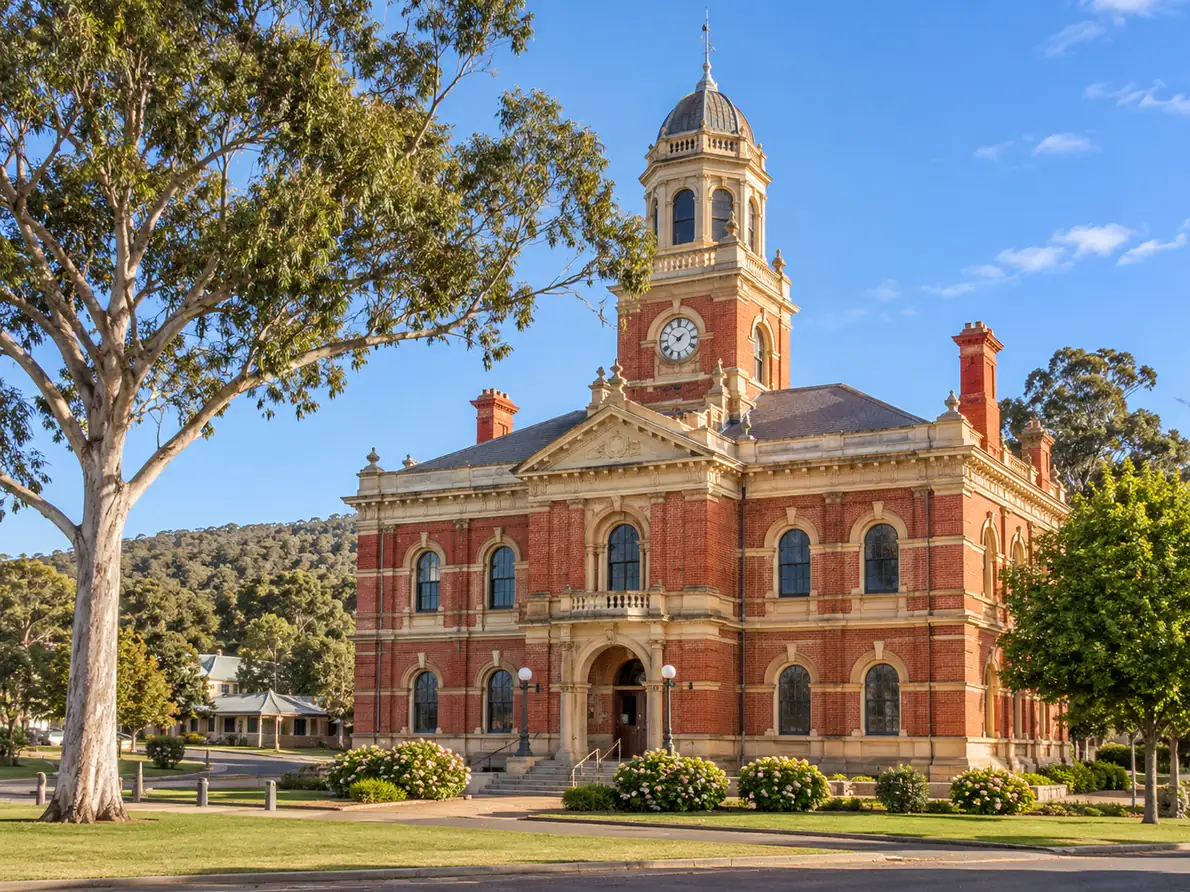
Traralgon is the largest, with 26,907 people at the 2021 Census. It is known for power generation in the Latrobe Valley, and Visit Gippsland calls it "the heart of Gippsland" for its arts, cafes and dining.
There is no city in Gippsland in the Melbourne sense. Traralgon grew after the railway arrived from Melbourne in 1877, and grew much faster after the Second World War, when the brown coal power stations at Yallourn, Hazelwood and Loy Yang brought work. It was proclaimed a city in 1964.
For a visitor, it is a practical hub with a few good reasons to stop:
- The Gippsland Performing Arts Centre and the heritage Traralgon Post Office in the centre.
- The Gippsland Plains Rail Trail, a flat ride from Traralgon to Stratford.
- Forest close by: Tarra-Bulga National Park, with its tree ferns and Corrigan's Suspension Bridge, and Morwell National Park.
- Wine: Narkoojee at Glengarry North, which Visit Gippsland notes is a 5 Red Star winery as rated by James Halliday.
Its other strength is the train. V/Line's 7.40 am weekday service from Southern Cross reaches Traralgon at 10.12 am, so it works as a car-free base for central Gippsland. Our Melbourne to Gippsland guide has the rest of the timetable.
What are the best towns to visit in Gippsland?
For a first trip: Metung and Paynesville on the lakes, Lakes Entrance, Walhalla in the mountains, Inverloch on the Bass Coast, Yarragon for cafes, and Sale for its port and gallery.
Pick by mood, not size. The prettiest places in Gippsland are mostly villages:
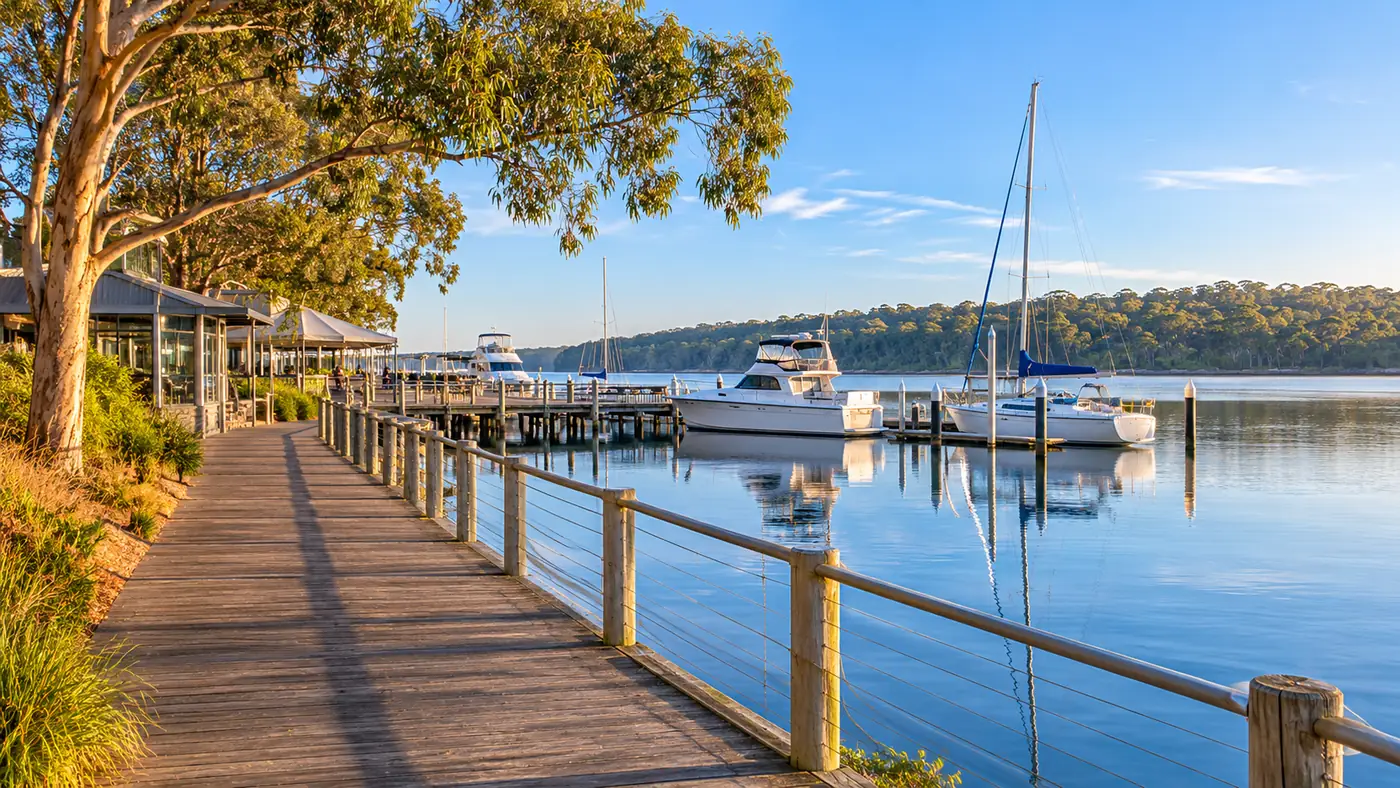
- Metung: at the end of a peninsula, almost surrounded by Lake King and Bancroft Bay. Visit Gippsland calls it "picture-perfect", and the hot springs are a short walk from the village.
- Walhalla: a preserved gold-mining town in a deep valley, with 35 residents, a cliff-top cemetery and the Walhalla Goldfields Railway (about 1 hour return, A$45 for adults).
- Inverloch: the "Pearl of the Bass Coast", with the Dinosaur Dreaming site at The Caves, where more than 15,000 bones, teeth and footprints of small dinosaurs have been found.
- Yarragon: a highway village known, per Visit Gippsland, for its laneway cafes, galleries and antiques. An easy stop on the way east.
- Sale: the historic Port of Sale, the wrought-iron Swing Bridge (Visit Gippsland calls it Australia's first movable bridge) and the region's largest art collection at the Gippsland Art Gallery.
- Lakes Entrance: a footbridge to the surf beach, and fish and prawns sold straight off the trawlers in summer.
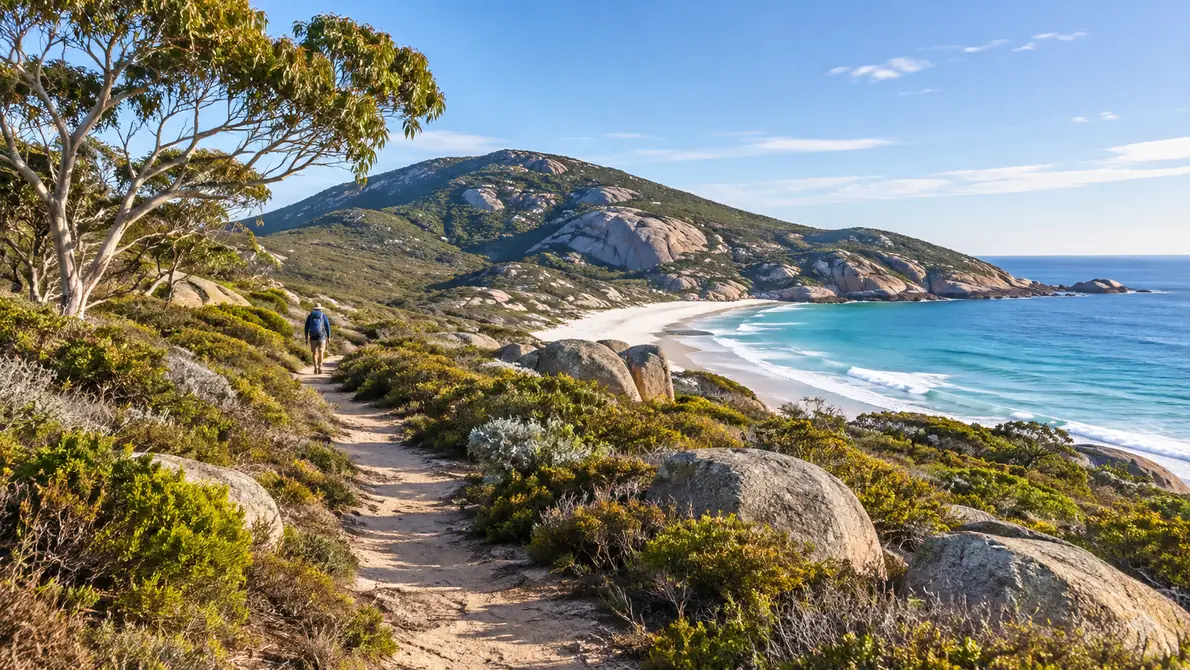
- Meeniyan and Fish Creek: small hills towns on the road to Wilsons Prom. Margaret wrote of the Prom day tour: "From the first breakfast stop at the pretty Olive at Loch, to the beautiful 5.2km walk through Lilly Pilly to the beaches etc." (Jun 2026)
Lesser-known places with the same charm: Port Albert, settled in 1841 and one of Victoria's first ports; Noojee and its 21 m timber trestle bridge; the Yarram silo murals; and Mallacoota, near the New South Wales border. The lakes towns have their own Gippsland Lakes guide.
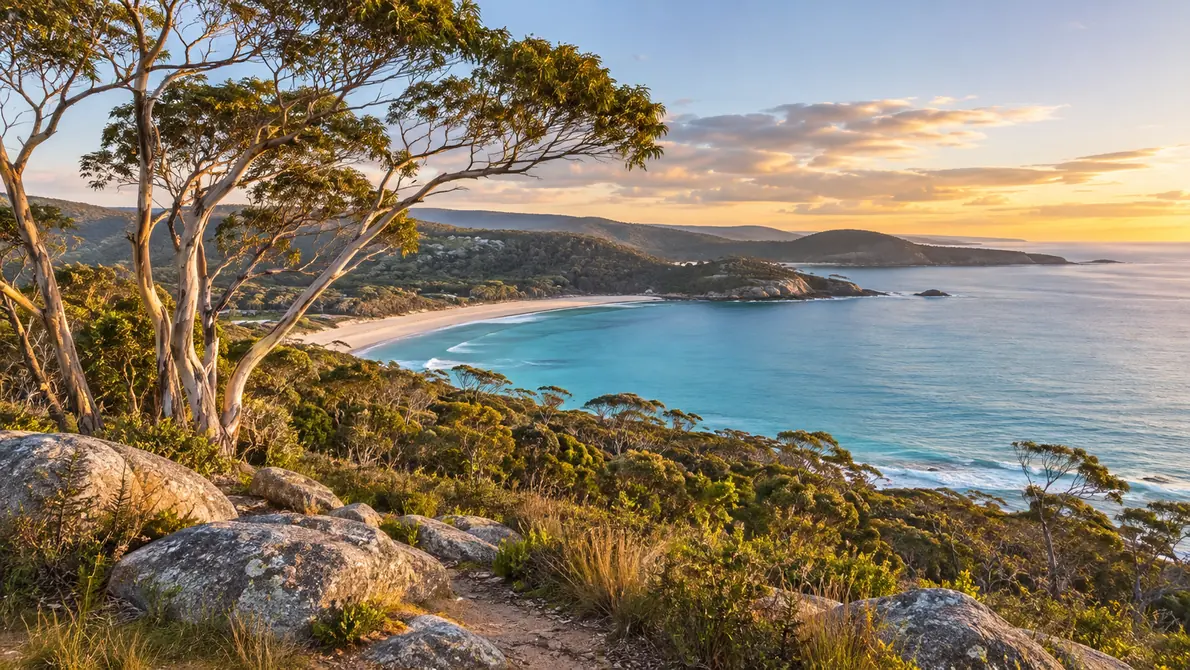
A small-group day at the Prom from Melbourne: a self-guided hike and Squeaky Beach.
Check dates for the Wilsons Prom day tourWhere should you stay in Gippsland?
Stay close to what you came for: Cowes for the Penguin Parade, Foster, Fish Creek or Tidal River for Wilsons Prom, Metung, Paynesville or Lakes Entrance for the lakes, and Traralgon or Sale for central Gippsland by train.
Gippsland is wide, and the drive from one corner to another eats a day. One base per area works best:
| Base | Good for | Tours from nearby |
|---|---|---|
| Cowes, Phillip Island | The Penguin Parade at sunset, the Nobbies, the Koala Conservation Reserve | Seal Rocks cruise from Cowes Jetty; Parade ticket |
| San Remo | The gateway to Phillip Island, on the start of the Bass Coast | Cape Woolamai cruise from San Remo Jetty |
| Inverloch | Bass Coast beaches and the Dinosaur Dreaming site at The Caves | The Bass Coast Rail Trail, 37 km to Woolamai |
| Foster, Fish Creek, Yanakie | Wilsons Prom; the closest fuel to Tidal River is at these towns | Whale cruise from Port Welshpool, September to November |
| Tidal River | Inside the Prom: 484 camping and caravan sites, cabins and safari-style tents | Walks start at the door |
| Traralgon or Sale | Tarra-Bulga, Walhalla, Ninety Mile Beach; on the train line | Self-drive day trips |
| Metung, Paynesville or Lakes Entrance | The lakes, Raymond Island koalas, cruises, the hot springs | Metung Hot Springs |
Booking tip: roofed accommodation at Tidal River books out early, per Visit Gippsland, and Phillip Island's population swells to about 40,000 in summer. If you are coming from Melbourne just for the Prom or the penguins, a day tour skips the hotel question entirely.
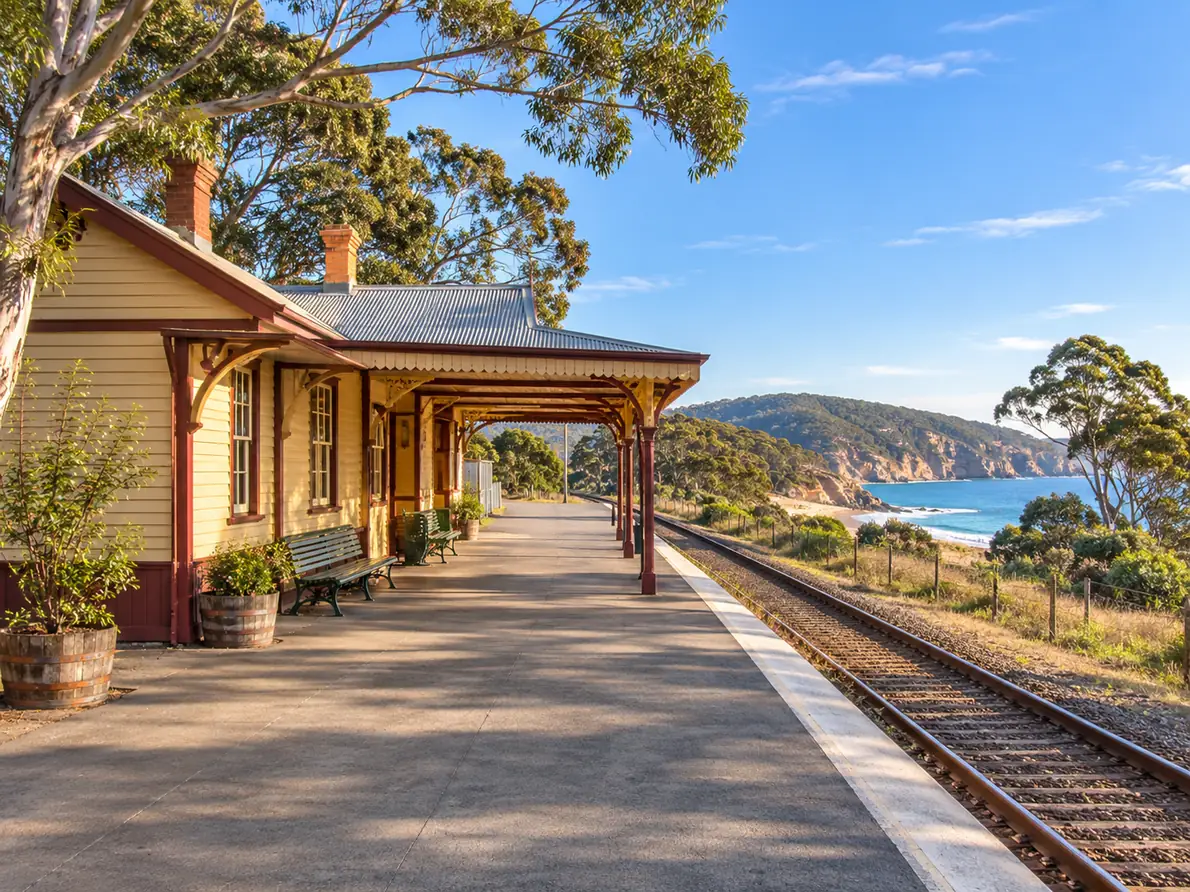
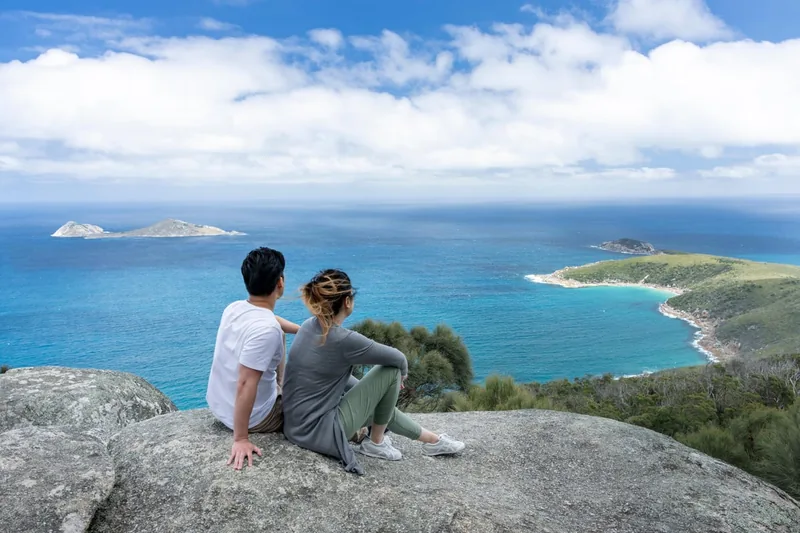
No base needed for the Prom: pickup at 688 Bourke St in Melbourne at 6:30 am, about three hours to hike, then Squeaky Beach.
Explore the Wilsons Prom day tour Tour detailsWhat is Gippsland known for, and what is its main industry?
Gippsland is known for farming, brown coal and power generation, oil and gas, and its nature: Wilsons Prom, the lakes, Phillip Island's penguins and Ninety Mile Beach.
The economy is a mix that shows from the road:
- Farming: green dairy country in the west and south, and vegetable growing, which is where many of the region's markets get their produce.
- Power: the Latrobe Valley holds some of the world's largest brown coal deposits. Hazelwood Power Station closed in March 2017, Yallourn is due to close in 2028, and AGL targets the end of the 2035 financial year for Loy Yang A.
- Oil and gas: around Sale and offshore in Bass Strait.
- Paper: a paper mill has run at Maryvale near Traralgon since 1939.
- Fishing: Lakes Entrance is home to what Visit Gippsland calls Australia's largest fishing fleet.
- Tourism: the Prom alone draws more than 600,000 visitors a year, per Parks Victoria, and the Penguin Parade on Phillip Island has run since the 1920s.
Food and wine are part of the pull too: Wyanga Park near Lakes Entrance is Gippsland's oldest winery, and the Warragul Farmers' Market runs on the third Saturday of every month, next on 21 November 2026.
Is Gippsland rural, and how big is it?
Yes. Gippsland is a rural region of about 41,556 km² in south-eastern Victoria, from the edge of Melbourne's outer south-east to the New South Wales border, with about 300,700 people.
It is made up of six council areas: Latrobe City and the shires of Baw Baw, East Gippsland, Wellington, Bass Coast and South Gippsland. East Gippsland Shire alone covers about 20,941 km², roughly half the region. Latrobe City covers only about 1,426 km² but has the most people, 77,318 at the 2021 Census. Bass Coast, which takes in Phillip Island, is the smallest in area.
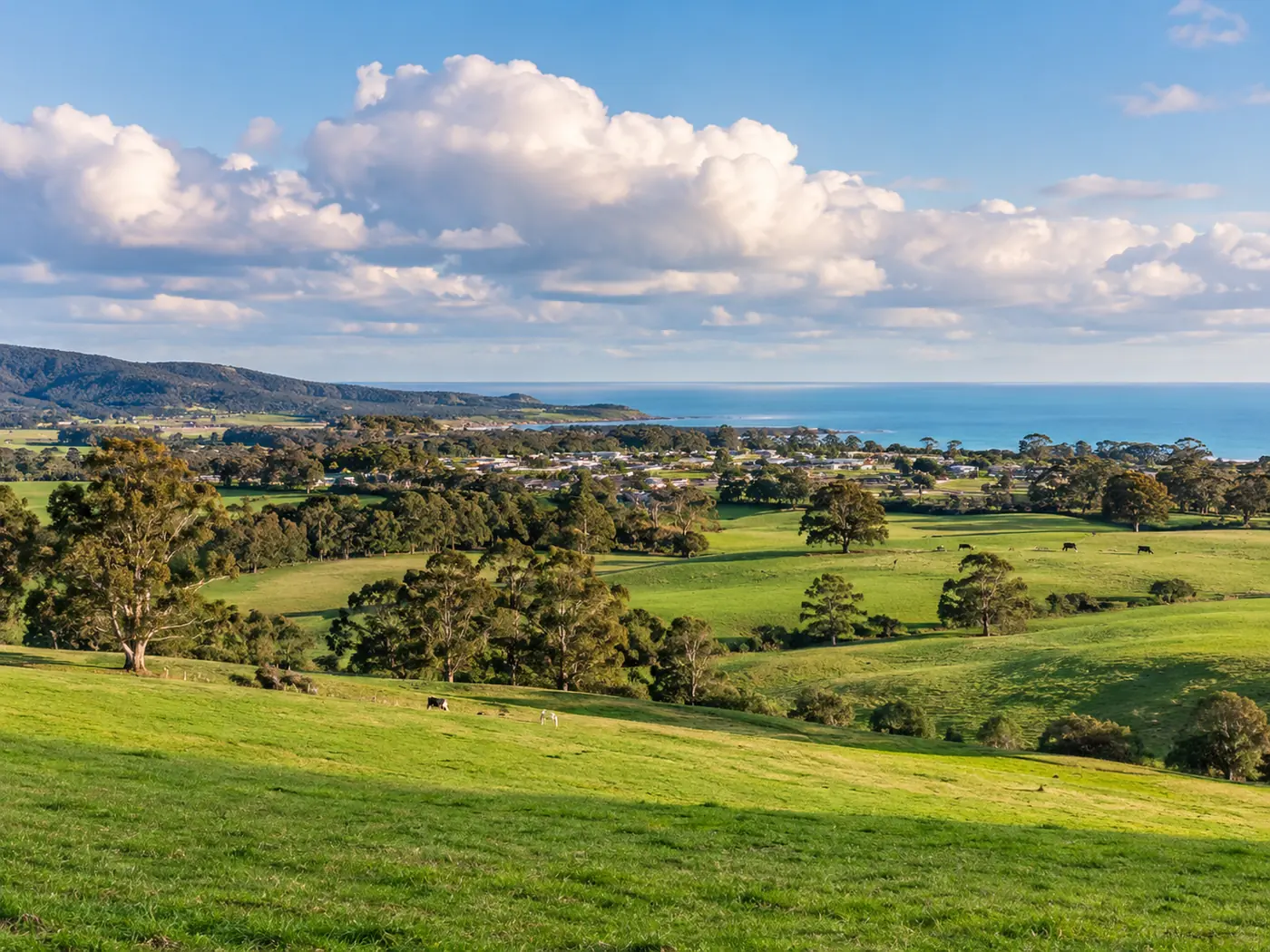
Visit Gippsland groups the region into five destinations for travellers: West Gippsland, South Gippsland, Central Gippsland, East Gippsland and Phillip Island. The region holds twelve national parks, from Wilsons Promontory, the southernmost tip of mainland Australia, to Croajingolong on the far east coast. Driving end to end is a long day, which is why most visitors pick one or two areas per trip.
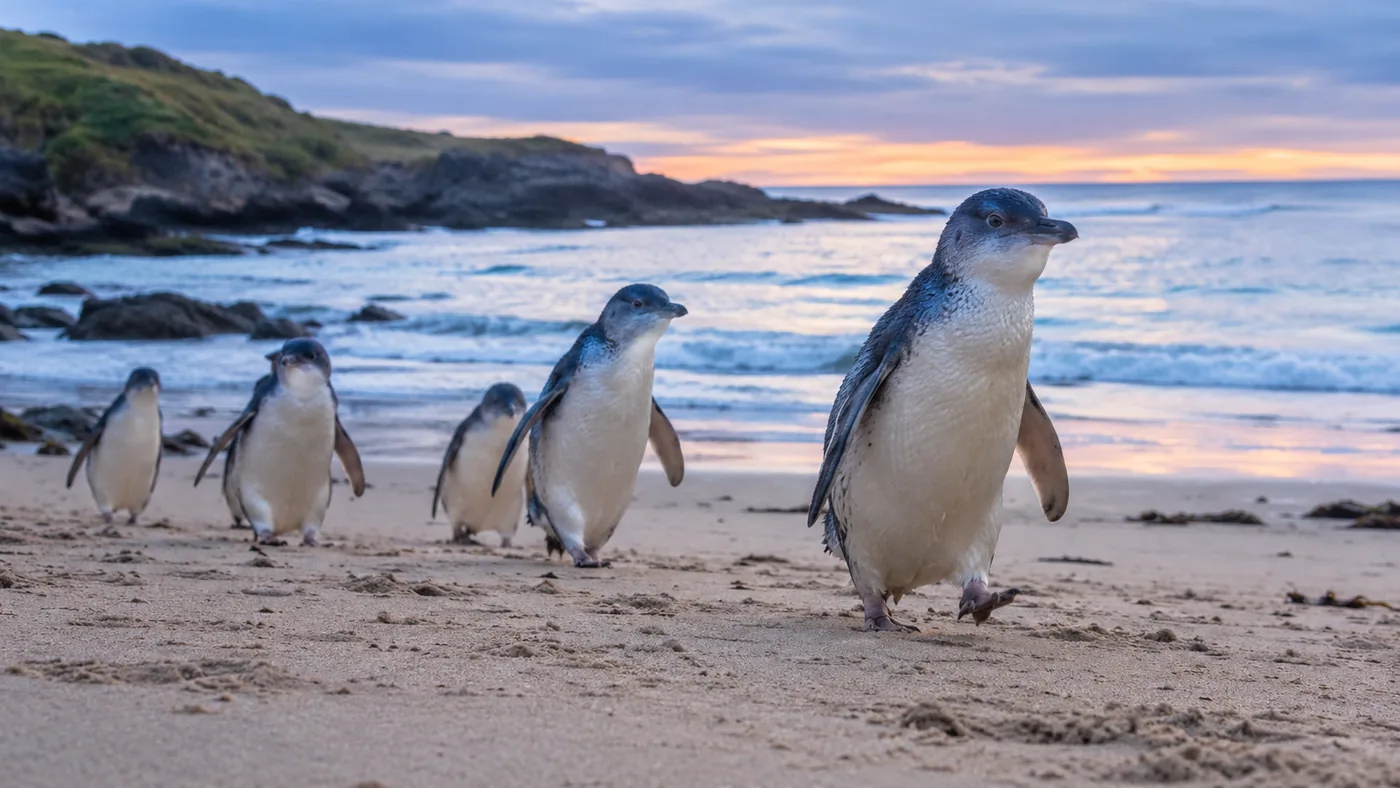
Penguins at sunset on Gippsland's western edge, with Moonlit Sanctuary and the Nobbies on the way.
Check dates for the Penguin Parade Eco TourWhy is it called Gippsland?
The Polish explorer Paweł Edmund Strzelecki named it in 1840 after his sponsor, Sir George Gipps, then Governor of New South Wales.
Strzelecki crossed the region in 1840, guided by Charlie Tarra, an Aboriginal man whose name lives on in the Tarra Valley and Tarra-Bulga National Park, as Parks Victoria records. The name was first written "Gipps' Land". Angus McMillan, exploring the same year, called the area Caledonia Australis, but Strzelecki's name stuck.
The land itself is far older than either name. Much of Gippsland is Gunaikurnai Country, with Bunurong Country in the west, including Phillip Island. On 22 October 2010 the Federal Court recognised that the Gunaikurnai people hold native title over much of Gippsland, and parks such as Buchan Caves, Tarra-Bulga and The Lakes are now jointly managed with them.
Is Gippsland a nice place to live?
Plenty of people think so: lower density than Melbourne, the coast and the mountains close, and train links from towns such as Warragul and Traralgon. For settling, the towns on the train line are the easiest start.
This is a visitor guide, so a short answer. The towns that work best for people moving from Melbourne are the ones with a station and services: Warragul (19,856 people), about 1 hour 40 minutes from Southern Cross on the 7.40 am train, and Traralgon, the largest town, with its arts centre, cafes and nightlife. Sale and Bairnsdale are further out on the same line. The coast and lakes towns are smaller and quieter, and they get busy in summer.
Spend a weekend before you decide. A Saturday at the Warragul Farmers' Market, a night in Sale or Metung, and a day at the Prom will tell you a lot about which corner suits you.
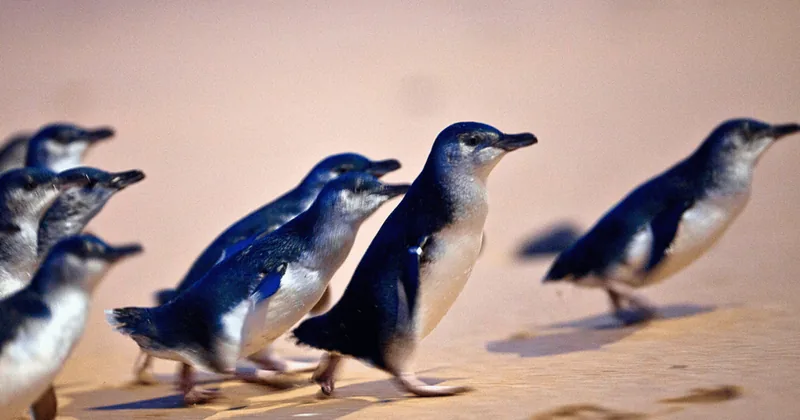
A full day to Phillip Island with a local guide: kangaroos and koalas, the Nobbies boardwalk and the penguins at sunset.
Explore the Penguin Parade Eco Tour Tour detailsFrequently asked questions
What is the biggest town in Gippsland?
Traralgon, with 26,907 people at the 2021 Census. Warragul (19,856), Morwell (14,389) and Sale (14,296) come next.
What are the prettiest towns in Gippsland?
Metung on the lakes, Walhalla in its mountain valley, Inverloch on the Bass Coast, Yarragon for its cafes, and Port Albert, one of Victoria's first ports.
Where is the best place to stay for Wilsons Prom?
Tidal River inside the park, or Foster, Fish Creek and Yanakie just outside it. There is no fuel at Tidal River; the closest is at those towns.
How many people live in Gippsland?
About 300,700 people across its six council areas at the 2021 Census, over about 41,556 km².
Ready to book
Choose your tour
Free cancellation up to 24 hours before on every option. Prices are from-prices in USD and move with the season.
Wilsons Promontory Wilderness Day Tour
- Return transport from Melbourne CBD
- Guide and driver
- Time to hike Mt Oberon, Mt Bishop or Lilly Pilly
Phillip Island Penguin Parade Eco Tour
- Melbourne hotel pickup and drop-off
- Penguin Parade standard viewing ticket
- Entry to Moonlit Sanctuary
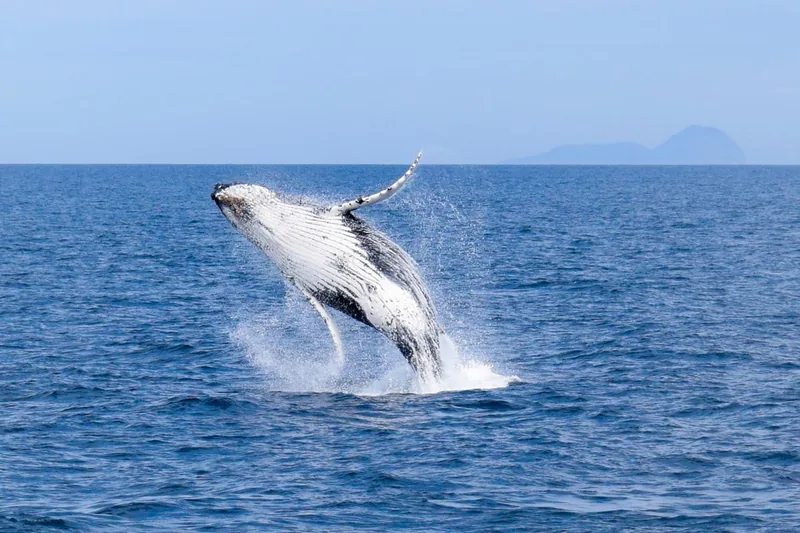
Wilsons Prom Whale Spotting Cruise with Lunch
- 6-hour cruise with the captain's commentary
- Morning tea, tea and coffee
- Homemade lunch